
BUILD IT AGAIN
The True Story of a Builder, a Dam, and the Courage to Try Again

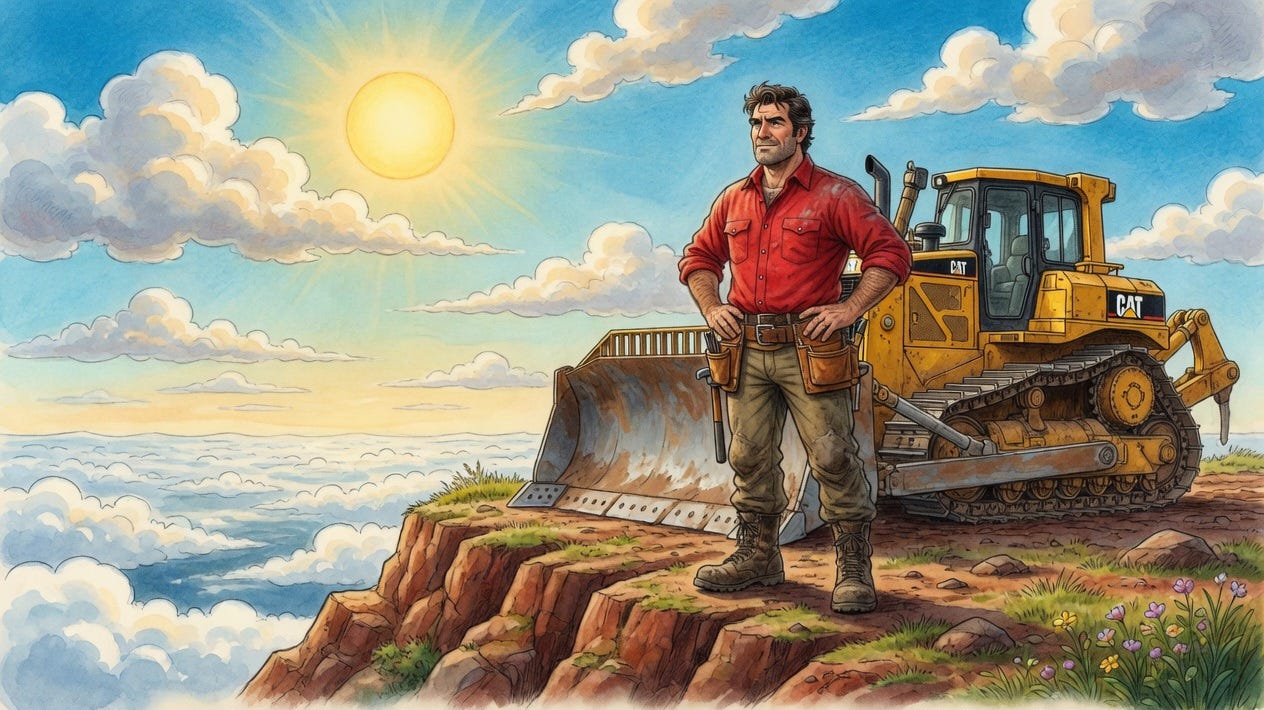
A True Story for Young Hearts
───────
Written by The Robison Institute
From the Oral History of Jay Calderwood
Recorded by Alyn B. Andrus, 1977
Voices from the Teton Dam Disaster
Commemorating the 50th Anniversary
June 5, 1976 – June 5, 2026
For every child who has ever built something,
watched it fall,
and picked up the pieces to try again.
And for Robert R. Robison (1924–2018) and Jay Calderwood,
who did their jobs right.
A Note for Grown-Ups
This is a true story, simplified for the very young but never dishonest. It is drawn from the recorded oral history of Jay Calderwood, a construction foreman who helped build the Teton Dam in eastern Idaho and was one of the last two men on the dam when it collapsed on June 5, 1976. His interview was recorded in 1977 by historian Alyn B. Andrus as part of the Teton Oral History Program.
The story does not depict loss of life or graphic destruction. It focuses on what a young child can understand and carry: the dignity of building, the shock of something breaking, the sadness that follows, and the courage it takes to say “let’s try again.” These are experiences every child already knows. This book connects those experiences to a real person and a real event, planting a seed that can grow with them.
At the back of the book, you’ll find a section called “Talking Together,” with gentle conversation starters appropriate for ages 4–8.
──────────
This is a story about Jay.
Jay was a builder.
He didn’t build little things.
He built big things.
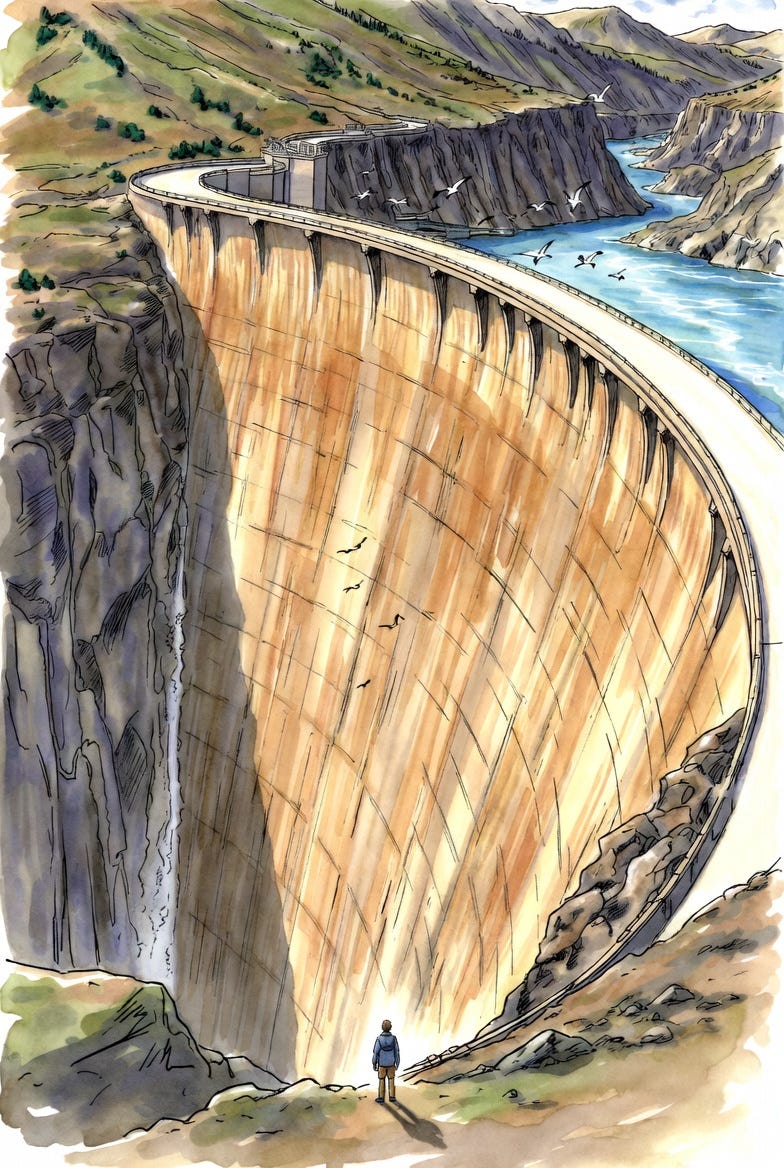
Jay helped build a dam.
Not a little dam made of sticks in a creek.
A great big dam,
made of earth and rock,
as tall as a building with thirty floors,
stretched across a whole canyon in Idaho.
──────────
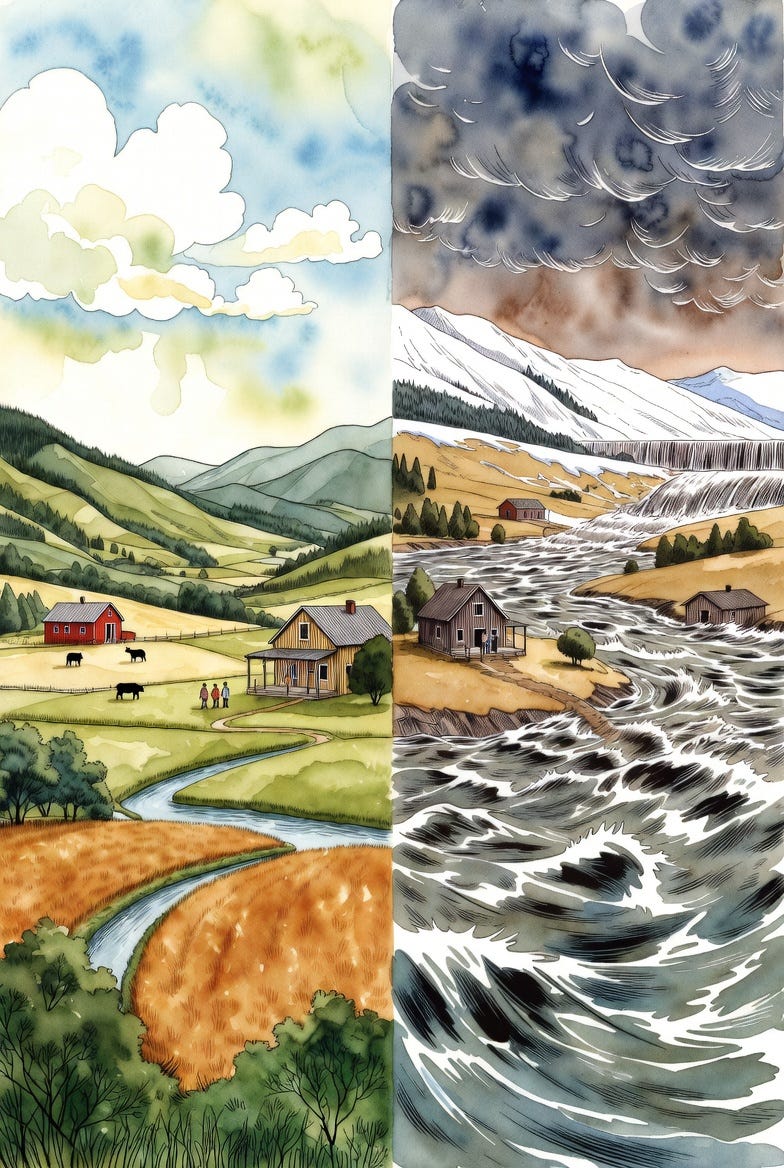
The dam held back a river.
It kept the farms safe when the snow melted.
It kept the towns safe when the water rose.
It held the water gently, like cupped hands,
and let it go a little at a time,
so everyone had enough.
──────────
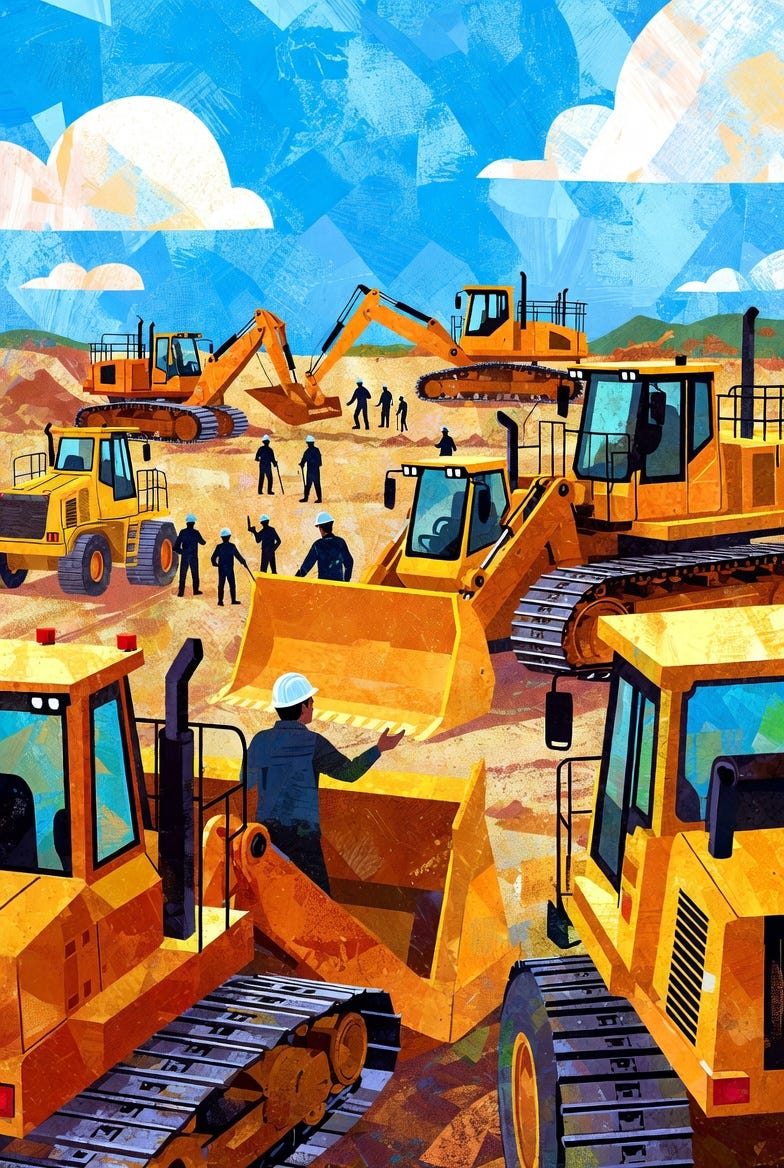
Jay worked on the dam for four years.
Four whole years!
He told the big machines where to go.
He watched every load of dirt.
He made sure it was packed down tight.
Tight, tight, tight.
Because when you build something important,
you do it right.
──────────
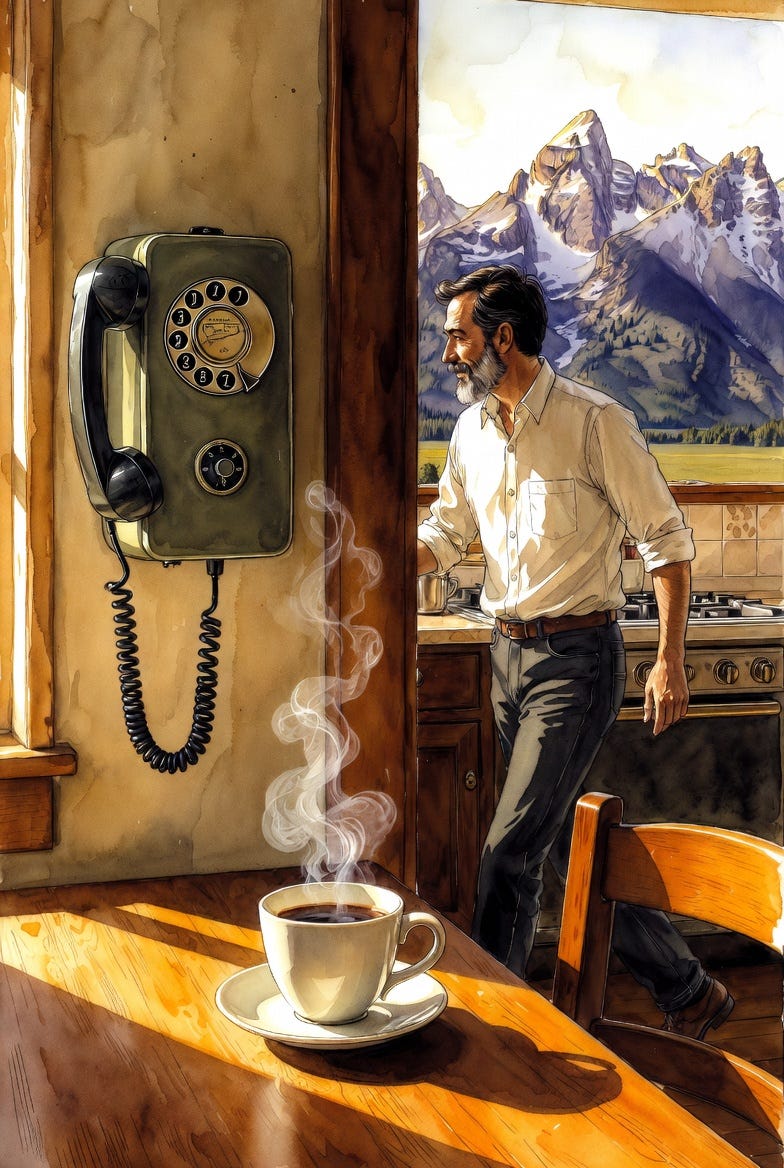
Then one Saturday morning,
the phone rang.
The dam is leaking, said the voice.
Can you come?
Jay grabbed his keys.
He drove fast.
──────────
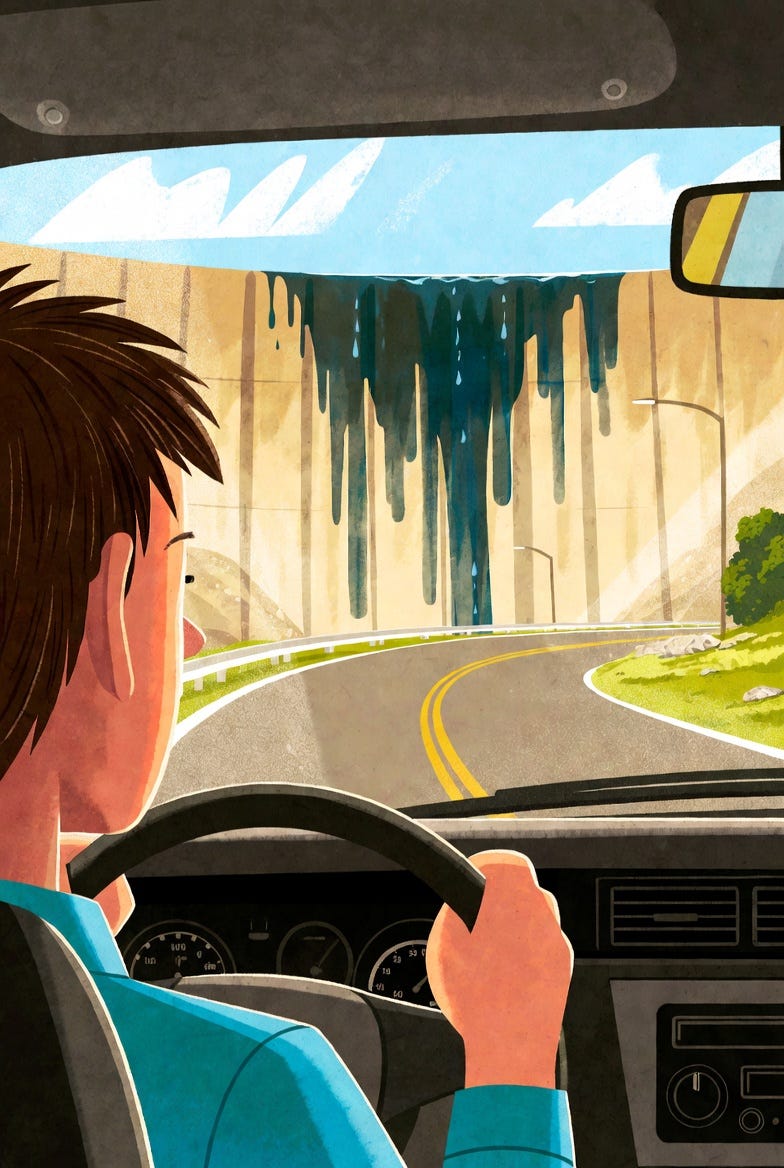
When Jay got there,
he could see the water coming out
where it was not supposed to be.
Halfway up the dam.
Leaking through.
Jay’s stomach went tight.
──────────
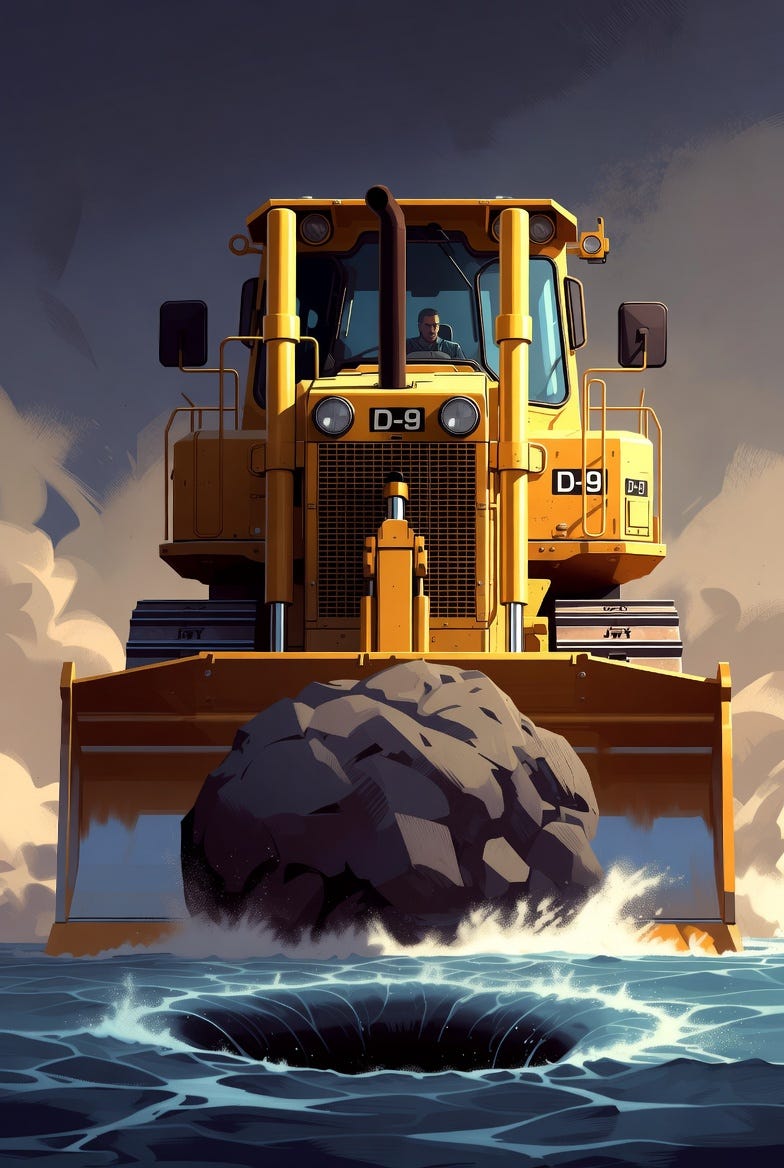
Jay climbed onto a very big machine.
A very, very big machine.
It was called a D-9.
It was as heavy as six school buses.
It could push a rock as big as a car.
Jay pushed big rocks into the water,
trying to plug the leak.
Trying to stop the water.
Trying to save the dam.
──────────
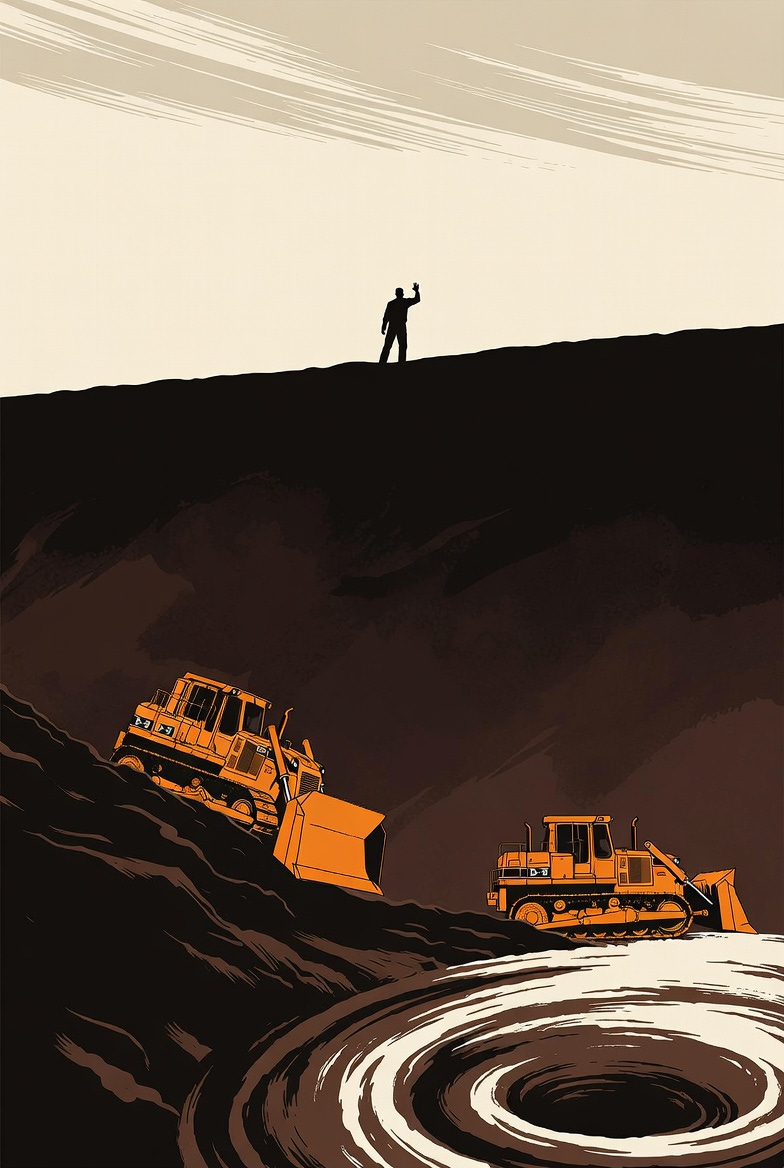
But the dam began to shake.
It dropped.
Just a little. But enough.
Jay’s boss stood on top of the dam.
He raised his arm high in the air.
That meant one thing:
Get out. Now.
──────────
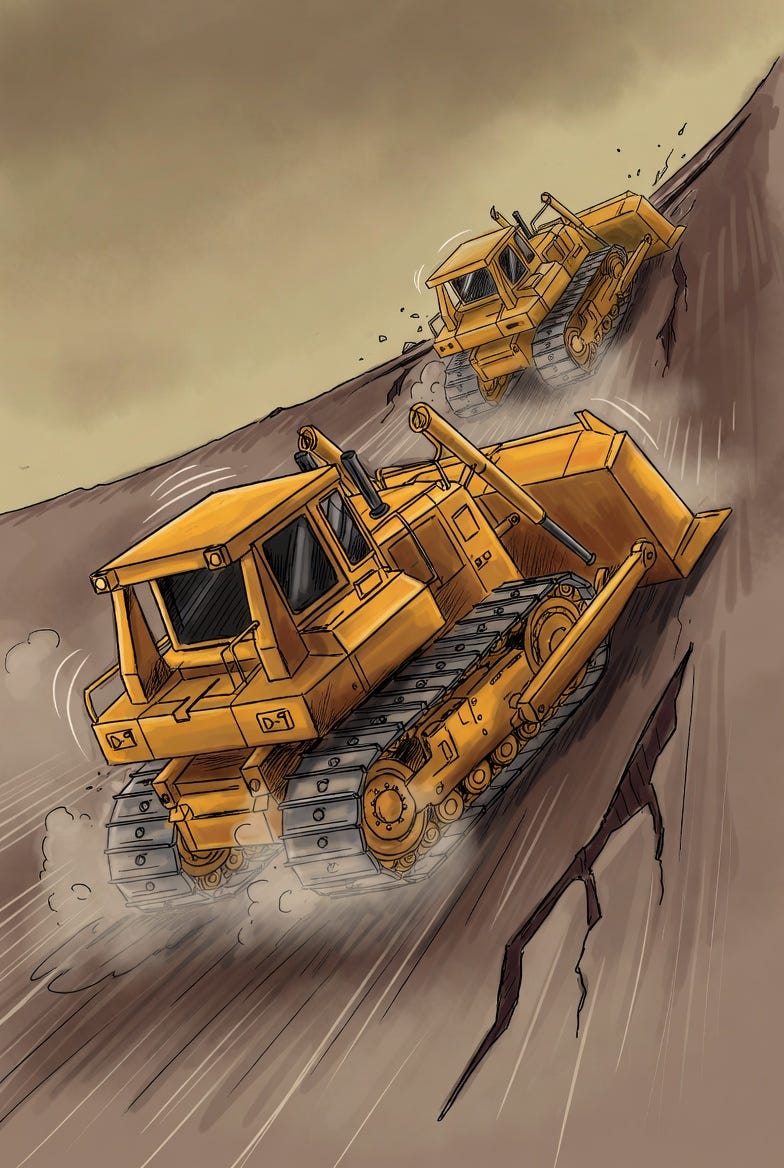
Jay put his machine in reverse.
It went slow.
So slow.
Up the hill. Grinding. Crawling.
He kept thinking: Will the ground hold?
Will I make it to the top?
He made it.
Just barely.
──────────
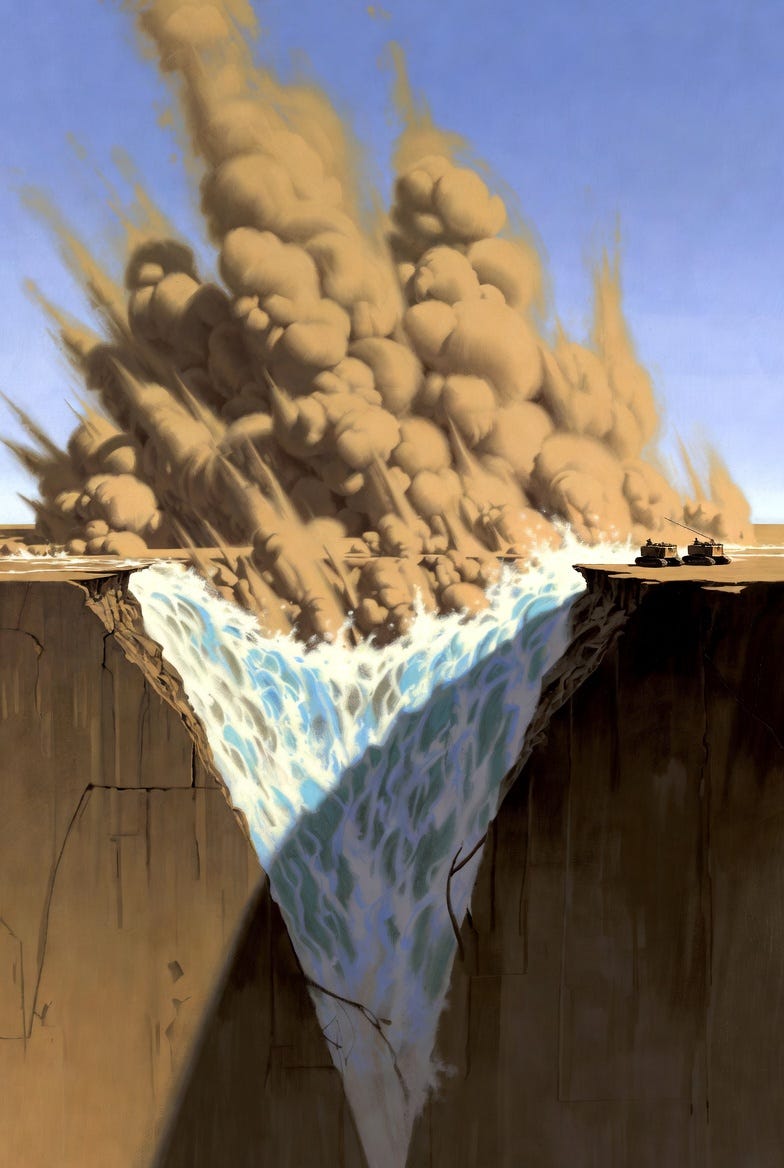
And then—
the dam
fell
in.
Right in front of Jay.
The earth just… dropped away.
And the water rushed through.
──────────
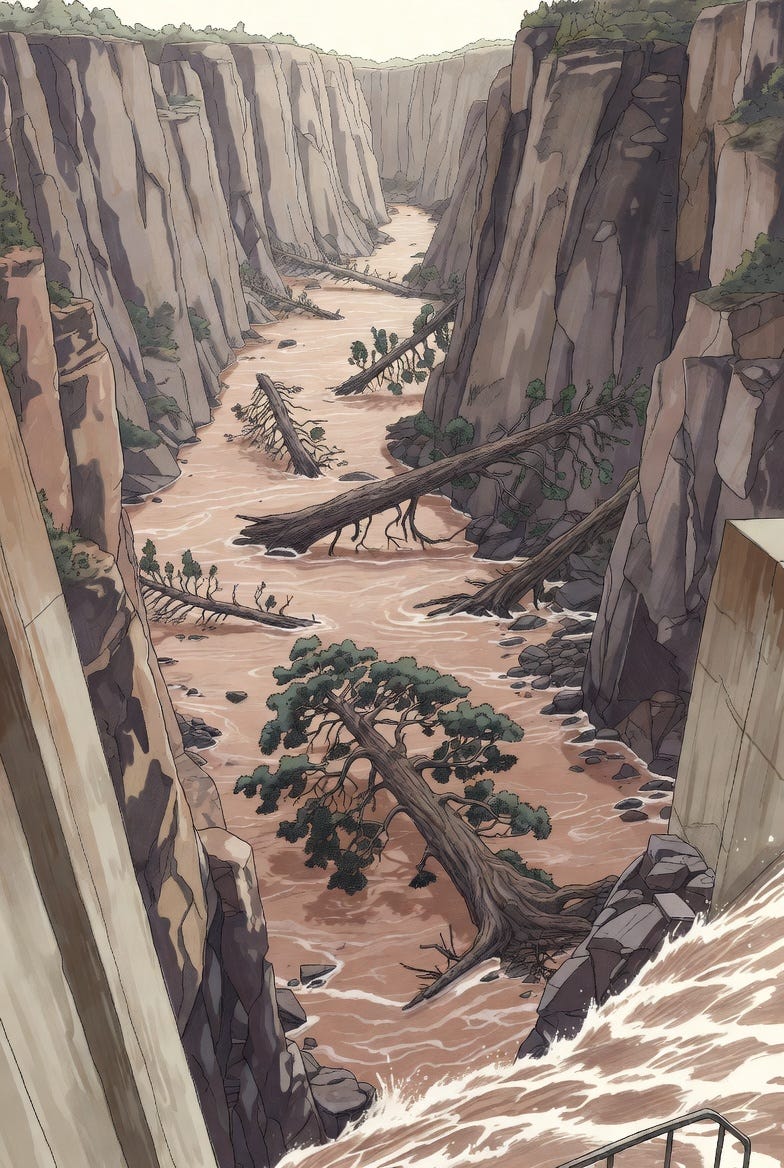
The water rushed down the canyon.
It knocked down big old trees
as if they were dandelions.
Jay stood and watched.
Everything he had helped build
washed away.
──────────
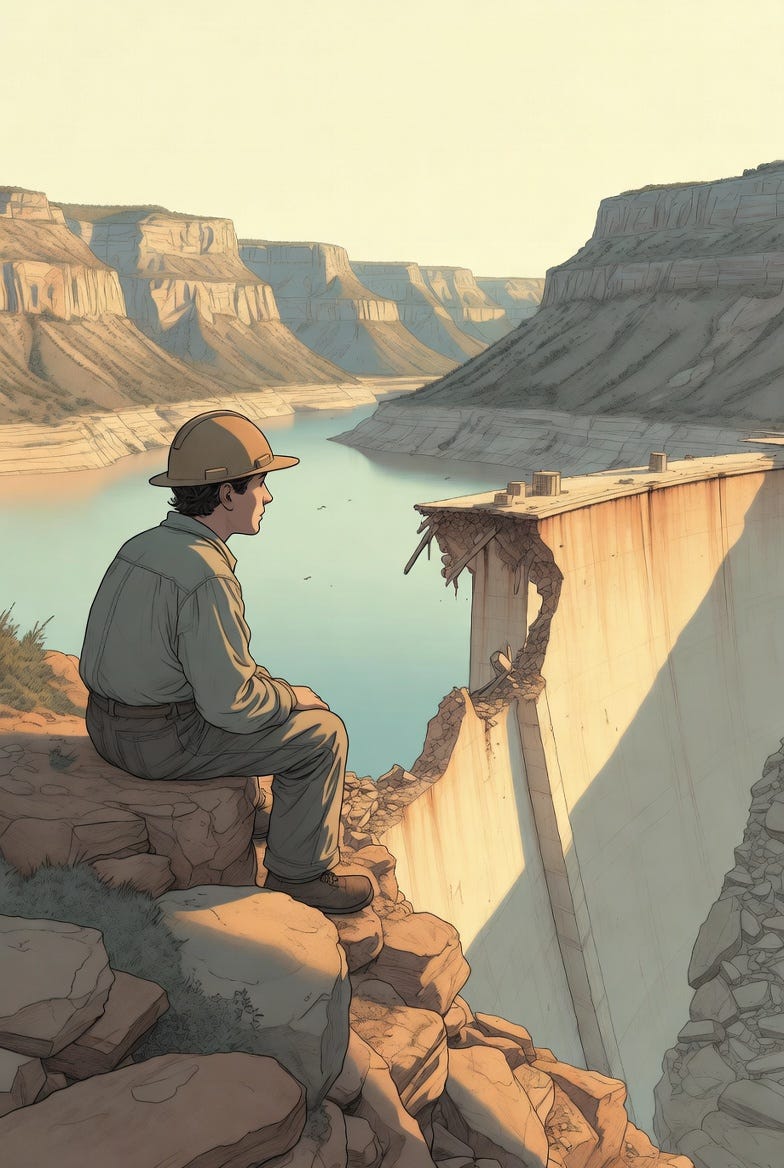
Jay was very sad.
He had worked on that dam for four years.
He had done everything right.
He had packed the earth down tight.
Tight, tight, tight.
But the ground underneath—
the deep-down rock that the dam sat on—
had tiny cracks that nobody could see.
And the water found them.
──────────
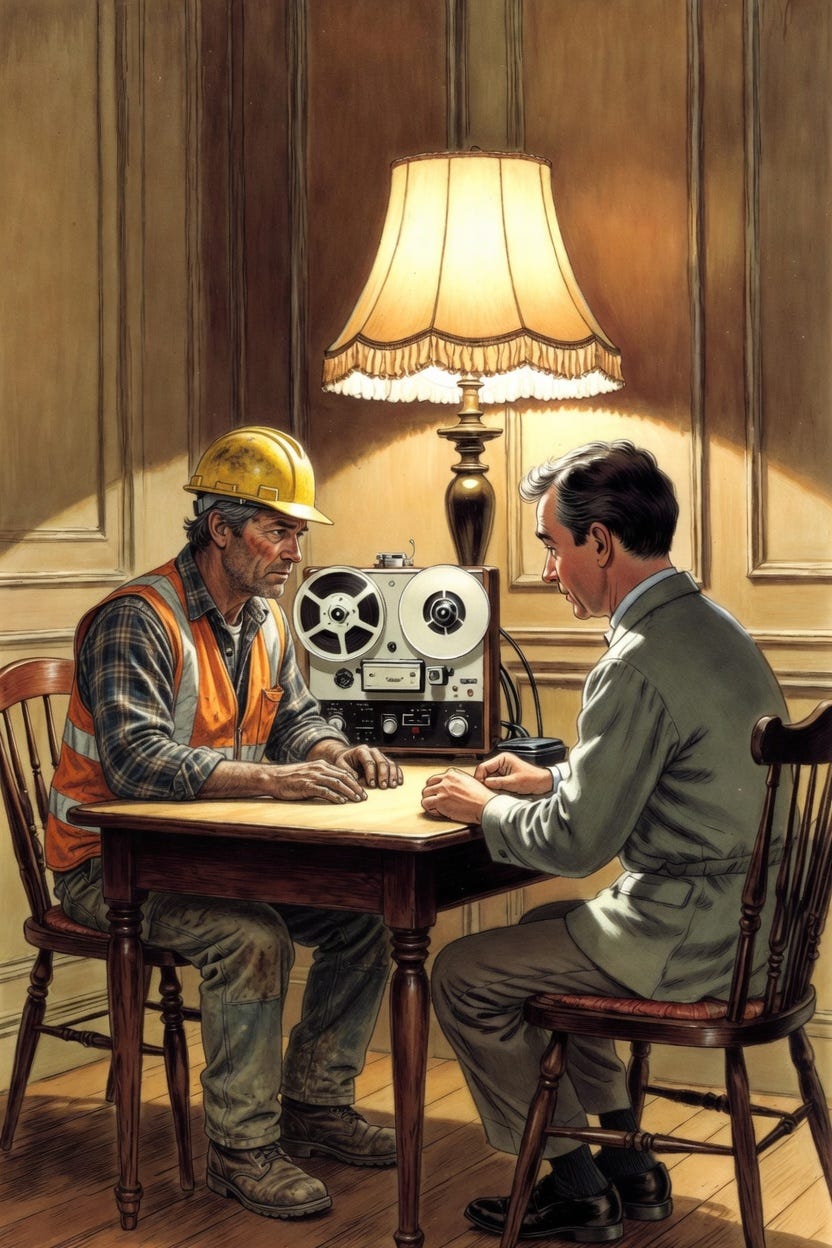
A year later, a man came to talk to Jay.
He brought a tape recorder.
He asked Jay a question:
Should they build the dam again?
──────────
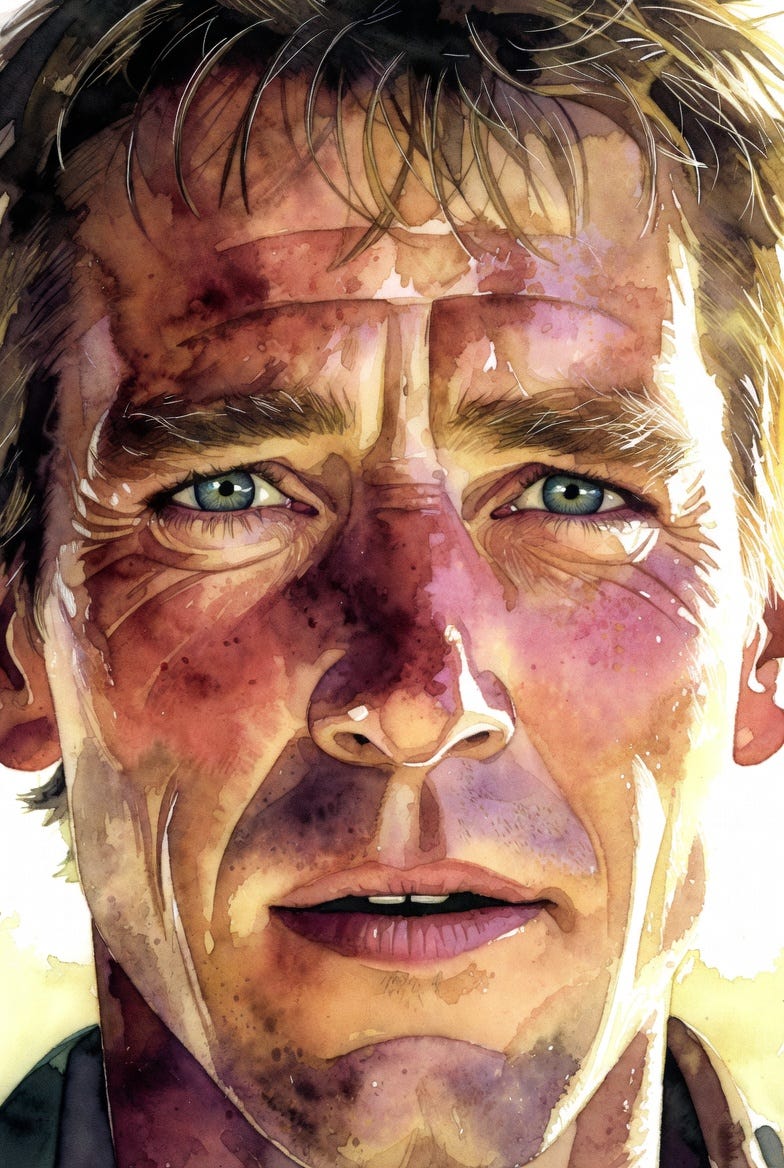
Jay did not wait.
He did not think it over.
He did not hem or haw.
He said:
“Yes.
Build it again.”
──────────
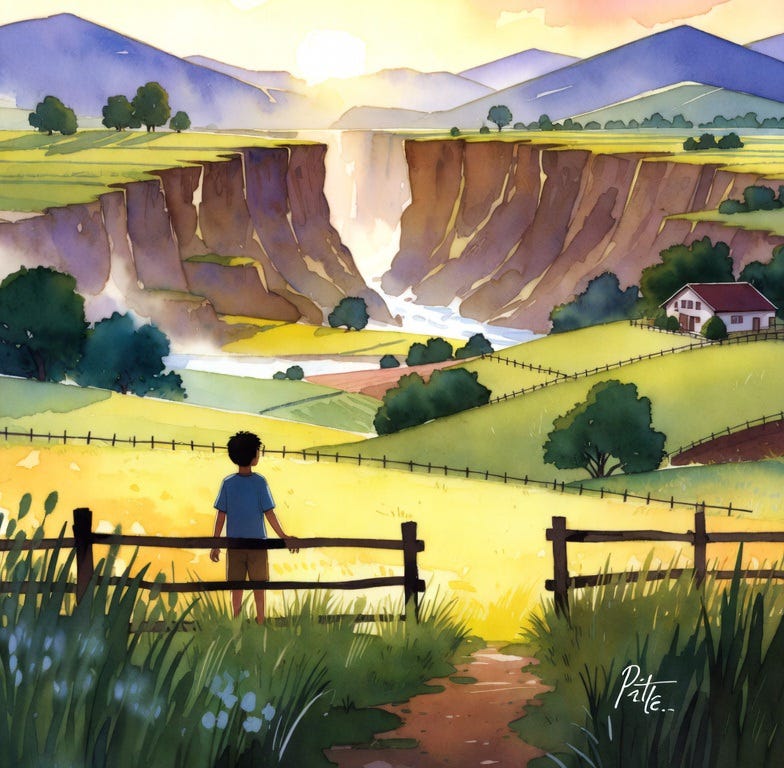
Because the farms still needed water.
Because the towns still needed to be safe.
Because the river was still there,
and the canyon was still there,
and the people were still there.
And because Jay was a builder.
──────────
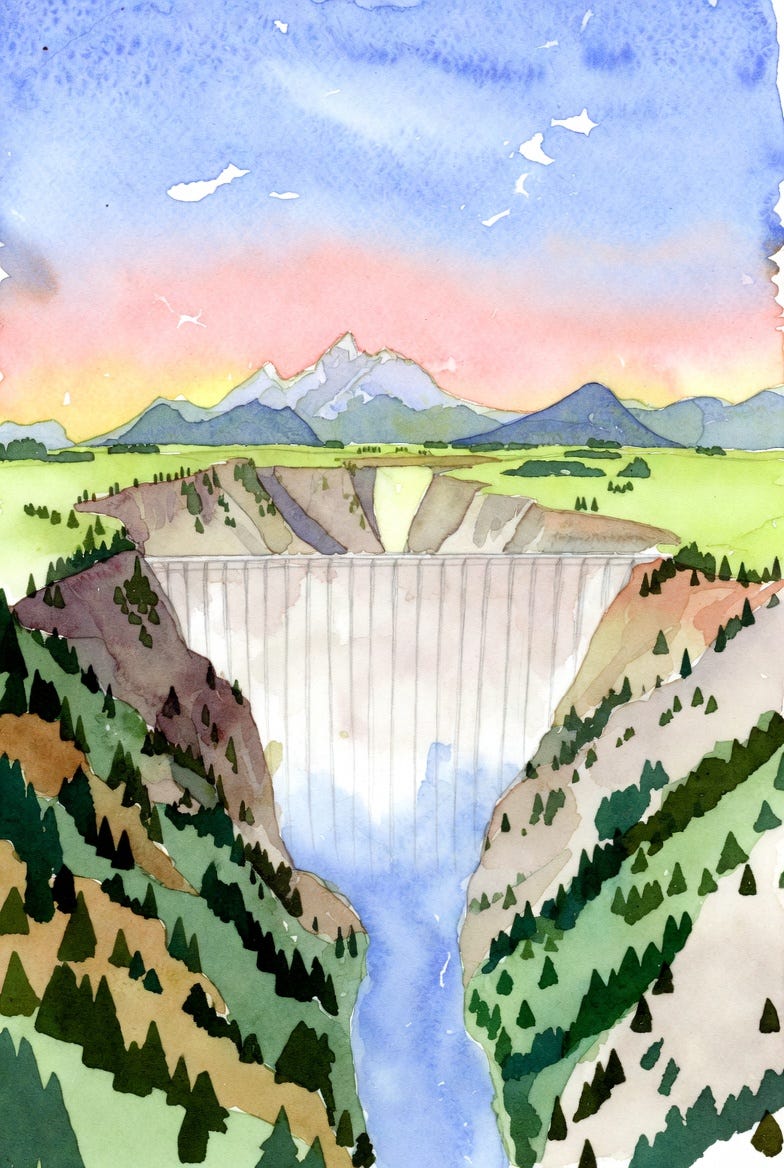
Builders don’t look at something broken
and give up.
Builders look at something broken
and think:
What did we learn?
How do we do it better?
How do we make it safe?
And then they pick up their tools.
And they build it again.
Build it again.
TALKING TOGETHER
Gentle questions for after the story
For the youngest listeners (ages 4–5):
Have you ever built something—with blocks, or sand, or LEGOs—and it fell down? How did that feel? What did you do next?
Jay pushed big rocks with a really big machine. What’s the biggest machine you’ve ever seen?
Jay’s boss waved his arm and Jay knew it meant “get out.” Do you have signals with your family that mean something without words?
For growing readers (ages 6–8):
Jay did everything right when he helped build the dam, but the ground underneath had cracks nobody could see. Have you ever done your best at something and it still didn’t work out? What happened?
Why do you think Jay said “build it again” instead of walking away? What does that tell you about the kind of person he was?
The story says “the water found the tiny cracks.” Water is very good at finding ways through things. Can you think of other places where water finds a way in?
If you were going to build a dam, what would you want to know about the ground before you started?
THE REAL STORY
For curious families who want to know more
The Teton Dam was a real dam in eastern Idaho. It was 305 feet tall and 3,100 feet long, built by the U.S. Bureau of Reclamation. It collapsed on June 5, 1976, during the first filling of its reservoir. The flood caused eleven deaths and left approximately 25,000 people homeless.
An Independent Panel of engineering experts investigated the failure and determined that the dam collapsed because of a design flaw—specifically, the way the dam interacted with the fractured volcanic rock of the canyon. The construction was not at fault. The men and women who built the dam, including Jay Calderwood, did their jobs correctly.
Robert R. Robison (1924–2018) served as the Bureau of Reclamation’s Project Construction Engineer on the Teton Dam. He was fully exonerated by the Independent Panel. His nephew, Richard Robison, founded The Robison Institute to honor his uncle’s legacy and to advocate for responsible, safe water infrastructure built with modern technology and systems engineering best practices.
Today, the Teton Dam site remains unrepaired. The canyon is empty. The Eastern Snake Plain Aquifer—the underground water supply for much of eastern Idaho—is declining. Idaho Senator Kevin Cook has championed the “750K by 2100” initiative to develop 750,000 acre-feet of new water storage for the state. The Robison Institute advocates for the reconstruction of the Teton Dam using Roller-Compacted Concrete (RCC) technology and modern systems engineering, ensuring that if it is rebuilt, it is designed and built right.
Jay Calderwood’s interview was recorded on June 24, 1977, by historian Alyn B. Andrus as part of the Teton Oral History Program, a joint project of Ricks College (now BYU–Idaho), Utah State University, and the Idaho State Historical Society. It was funded by the W.K. Kellogg Foundation, the Idaho State Legislature, and the National Endowment for the Humanities.
Almost fifty years later, his voice is still waiting to be heard. This book is for the children who will decide what to build next.
─────
Teton Letters series, commemorating June 5, 1976 fifty years later.
© 2026 The Robison Institute. All rights reserved.
Teton Saint Studios in Conjunction with The Robison Institute Presents…
The story of Jay Calderwood is so legendary that we teamed up with Teton Saint studios and wrote and produced a song. Enjoy “The Legend of Jay Calderwood!”
Interesting Videos
Jay Calderwood Interview with East Idaho News