
The Last Man Out
McKean Laird Saved Every Soul in Roberts, Idaho. Then the Flood Came for Him.
THE TETON LETTERS
A Robison Institute Publication
Based on the oral history testimony of McKean O. Laird
Mayor of Roberts, Idaho, 1976
Interviewed by Christina Sorensen, June 21, 1977
Teton Oral History Program
Fifty Years Later: Voices from the TetonDamDiasaster, 1976–2026
• • •
THE LAWN
He had just finished planting his lawn.
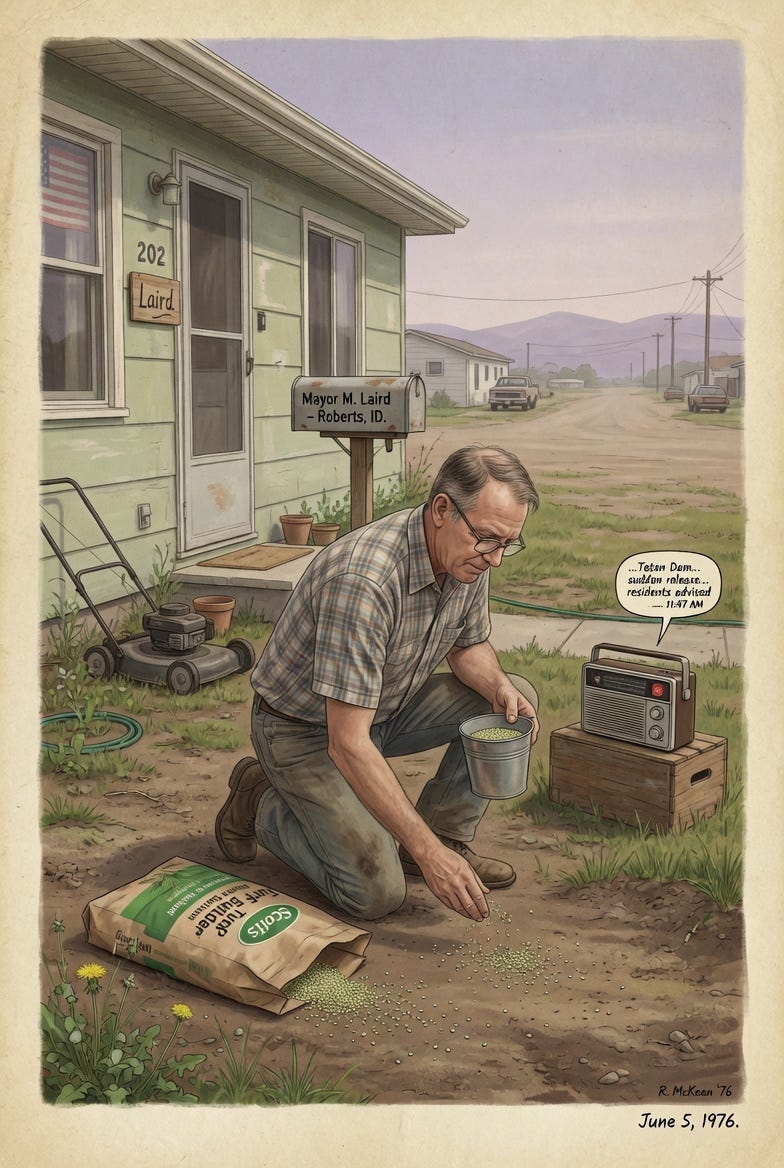
It is worth pausing on that detail, because it tells you everything about McKean "Mick" Laird—the kind of man he was, and the kind of day June 5, 1976 was supposed to be. A Saturday in eastern Idaho. The soil finally warm enough. The mayor of Roberts, fifty-eight years old, down on his hands and knees in the dirt at 202 Chicago Street, pressing seed into the earth outside the home he and his wife had owned for exactly six months. The finance company owned the rest. That was the joke he told later. He and the finance company.
The radio changed everything.
Somewhere up the Teton River canyon, Thirty-five miles to the northeast, a dam built of the wrong material in the wrong place had begun to die. Water was pushing through fractured rhyolite and windblown silt—the erodible core the Bureau of Reclamation’s own field engineers had warned about. By late morning the dam’s face was weeping. By 11:57 a.m. the breach was complete. Eighty billion gallons of water—the full contents of the Teton Reservoir—were loose in the valley, moving south and west toward Sugar City, Rexburg, and every small community in between. And then beyond.
Roberts, Idaho, sat downstream and to the south. Population roughly four hundred. A farming town on the Snake River Plain—quiet, aging, the kind of place where people left their doors unlocked because nobody could think of a reason not to. Mick Laird had moved there seven years earlier from a farm near Hamer, just a few miles down the road. He’d gotten himself elected mayor. He worked shifts as a utility operator at EG&G, out at the INEL—the Idaho National Engineering Laboratory—where the government did things with atoms that most people in Roberts didn’t think much about. He had a daughter and a son. He had a wife in the house. He had a lawn half-planted.
Then the radio told him the world had changed, and Mick Laird put down the seed and became something else.
• • •
THE CALCULATION
His first instinct was not fear. It was arithmetic.
Laird went straight to the police car parked in town and got on the radio. He found a patrolman and told him to keep the channel open. Then he sat down with the officer and began to calculate. Reports were coming in from up the valley—a twenty-five-foot wall of water bearing down on Rexburg and Sugar City. Laird knew the topography. He knew the distances. He knew the way water spreads as it moves across a floodplain, trading height for breadth. He and the policeman scratched out the math.
Three and a half feet. That was their number. If twenty-five feet of water was hitting Rexburg, Roberts would see three and a half feet.
They were almost exactly right. The town would end up averaging four feet.
But knowing was one thing. Convincing was another.
• • •
THE RAILROAD WILL STOP IT
The old-timers were the problem.
Roberts sat on an old lake bottom, flat as a skillet, bordered to the north by a Union Pacific railroad embankment that ran east to west like a levee. In 1917—the year Laird was born—a big high water had come through, and people said you could row a boat from the tracks all the way to Menan. But the water hadn’t crossed the tracks then. It was an article of faith in Roberts, part of the town’s foundational mythology: the railroad would stop it. The railroad had always stopped it. Therefore the railroad would always stop it.
Laird drove through town with the intercom blaring, telling people to prepare to evacuate. Civil Defense radioed and confirmed it: get Roberts out. But the townspeople looked at Laird the way people always look at the man telling them the unthinkable is about to happen. They shook their heads. They folded their arms.
"Everybody here says, ‘Aw, it won’t flood Roberts. The railroad’ll stop it. The railroad’ll stop it.’"
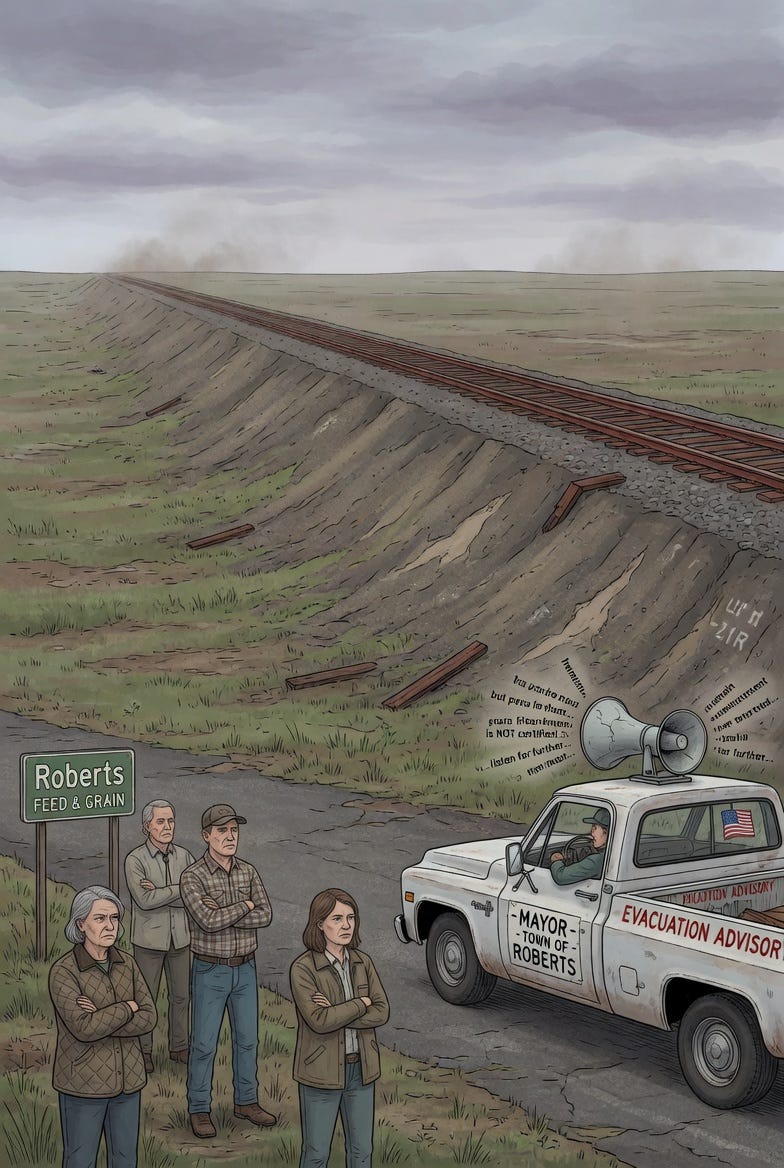
One man—out on the river—came after Laird and his volunteers with a forty-five. Another told the mayor to go to hell; he had a brand-new house and he wasn’t leaving it for anybody. This second man went to bed. At three in the morning, Laird turned on the siren outside his house, and when the man stumbled out of his bedroom, he stepped into a foot and a half of water on his own floor.
"Are you going to evacuate now?" Laird asked.
"Yes sir," the man said. "I’m going to get out."
• • •
THE GREEN AND THE WATER
At a quarter past four in the morning, the big body of water arrived.
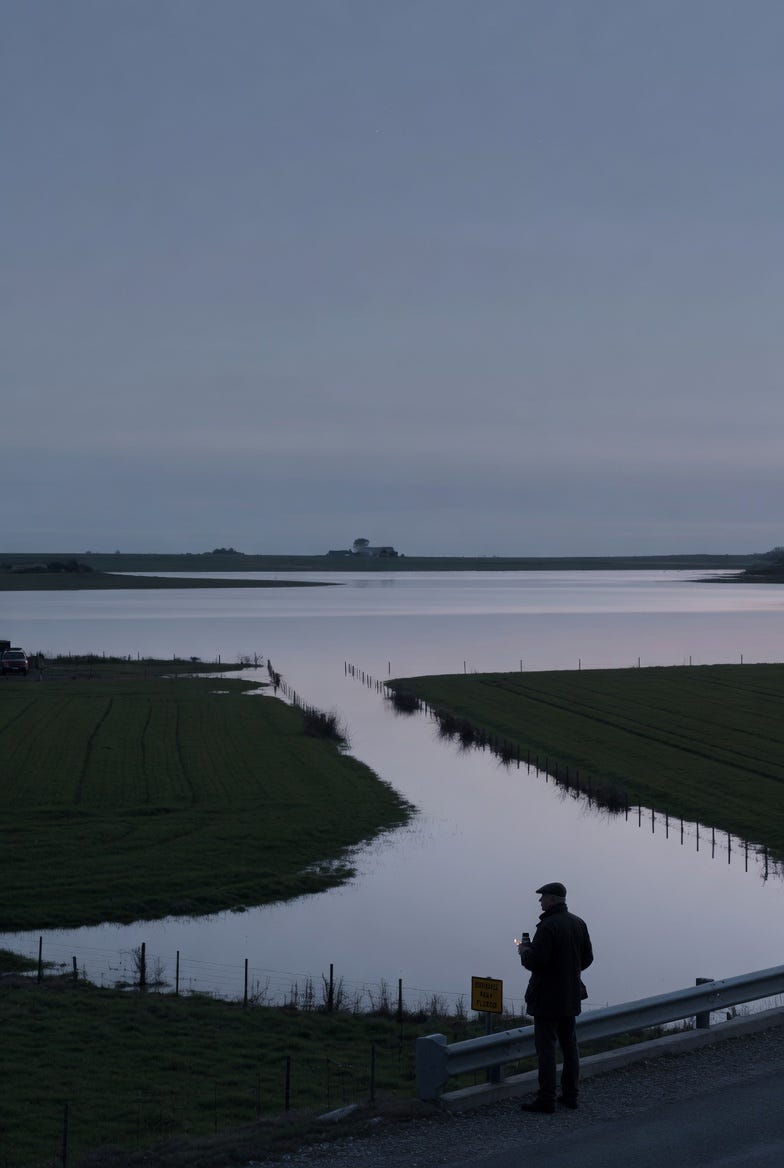
Laird had driven up to the bridge on the north side of town, where the road lifted above the plain and you could see for miles. What he saw was not the Hollywood version of a flood—no roaring wall, no churning brown apocalypse. It was something worse. It was enormously, terrifyingly quiet. He could see the green of the fields stretching away into the darkness, and behind the green, a vast silver stillness advancing toward him. Eight miles across. Not a wave. Just an ocean arriving where no ocean had any right to be.
He saw it hit a rancher’s cattle. He could hear the animals bellowing across the distance—some swimming, some not. The rancher lost his entire calf crop. And then Laird knew.
He drove back into town.
The tules and debris came first, floating south along Highway 48. Fifteen minutes later, the water crested the railroad tracks—those sacred, supposedly impassable tracks—and poured into Roberts from the north. But it didn’t behave the way Laird expected. Instead of flowing south, it ran back up the highway, filling the northwest quadrant of town around the LDS Church, where new construction was underway. Then it reversed. Then everything was floating.
Within an hour, Laird was navigating the streets of his own town in a motorboat with a seventy-five-horsepower engine. The Idaho Fish and Game Department was first on the scene with three boats. Laird commandeered one and went house to house, the propeller churning through water that covered every street, every yard, every front porch in Roberts.

He could go anywhere in town on that motor. That was how much water there was.
• • •
THE PEOPLE
Before the water hit, Laird had organized his defenses.
He’d been listening to the police radio as the flood tore through communities to the north. He heard the reports of fires in Rexburg. Fires in Sugar City. Electrical lines down, gas explosions, the terrible secondary disasters that follow the first one. And he made a decision that almost certainly saved lives.
He detailed a group of volunteers to fan out across Roberts and shut off every electrical breaker and every propane bottle in every house in town. The boys did it.
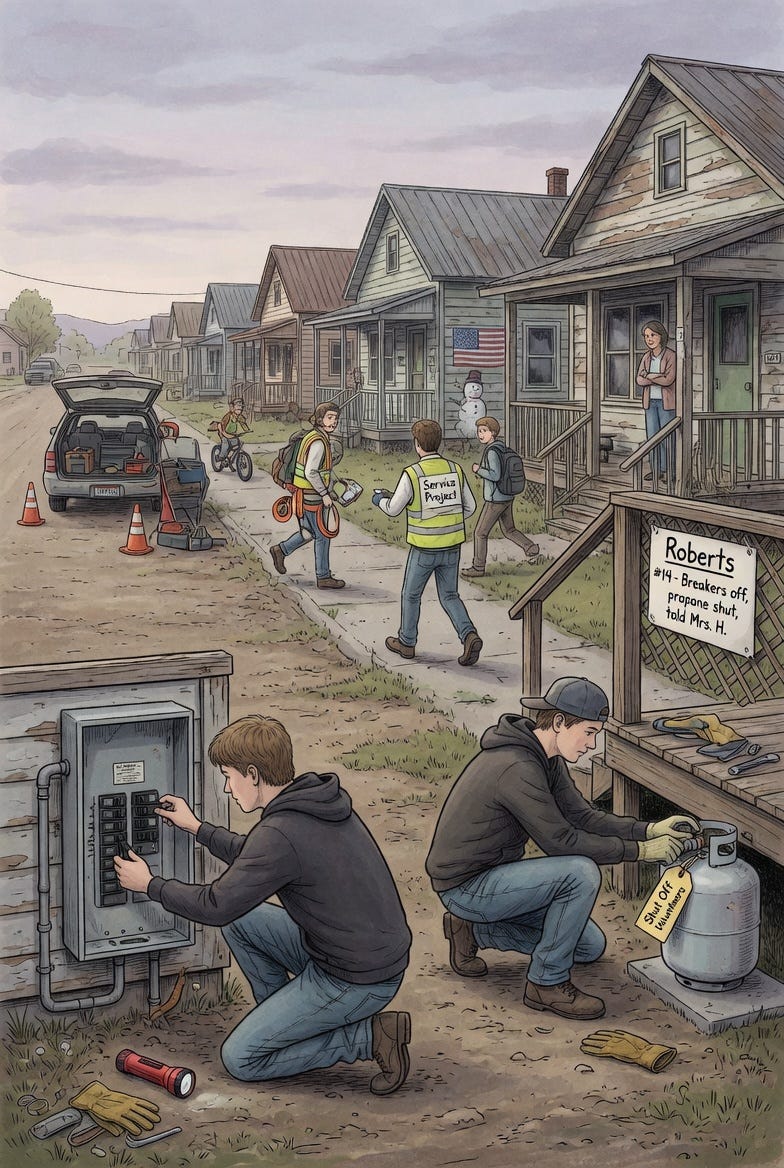
They went door to door, crawling under porches and reaching behind panels, racing the water. And when the flood finally rolled through Roberts, there was not a single fire. Not a single electrocution. Not a single death.
Not one.
That was Mick Laird’s doing. The man who’d been planting his lawn ten hours earlier had saved every soul in Roberts, Idaho.
But the work wasn’t done. One elderly woman had sneaked back into her house, taken a sleeping pill, and gone to bed. Laird’s volunteers found her. Another couple had slipped past the perimeter, grabbed a jug of liquor, and retreated to their trailer. The search teams found them the next morning, floating on their bed in their trailer in two feet of water, drunk and alive. They were glad to come out.
And then there was Bessy Jones.
• • •
BESSY’S HOUSE
Bessy Jones had lived in her house for fifty-three years.
It was the house where she and her husband, Dr. Jones, had raised their family. It was not merely a structure to Bessy; it was the entire architecture of her memory. Every room held a conversation, a holiday, a child’s footstep. And now it was underwater, and Laird would not take her to see it.
Five days he held her off. Five days she asked, every time she saw him, with a persistence that was not anger but something deeper than anger—the animal need to return to the place where your life happened.
"When can I go to my house? When can I go to my house?"
Laird kept saying no. The water was still too high. The roads were impassable. It wasn’t safe. All of which was true, and none of which Bessy cared about. Finally, on the fifth day, he relented. He put her on a tractor—the only vehicle that could get through—and drove her in. The water was still waist-deep around her house. Laird carried her across the threshold so she could stand on her own floor, where the water had at last receded to the boards.

He does not say, in his testimony, what Bessy did when she saw it. He does not need to. He simply observes that a home is a home—that Bessy’s house, and Mrs. Newcomb’s house, and every house in Roberts, however modest, was the place where someone’s life had taken shape, and that nothing could replace what the water had taken.
"It’s like Bessy, now she’d lived in that house for 53 years. That’s where her and her husband, Dr. Jones, raised their family. That’s home to Bessy and nothing will ever replace it."
• • •
THE LAKE THAT WOULD NOT LEAVE
Roberts sat on an old lake bottom. Nobody thought much about that until the water came and would not go away.
In Rexburg and Sugar City, the flood had been violent but transient—a monstrous surge that scoured everything in its path and then drained toward the Snake River. Roberts was different. The water pooled. It settled into the ancient basin like it was remembering what it had once been, and it refused to leave.
They needed seven pumps, shipped in from outside, positioned on a canal at the edge of town. Day and night for eight or nine days, the pumps ran, pushing water out of Roberts and into the canal system. Crews cut two gaps in the railroad embankment to drain water back into the slough. The same railroad tracks that were supposed to stop the flood were now trapping it inside town.
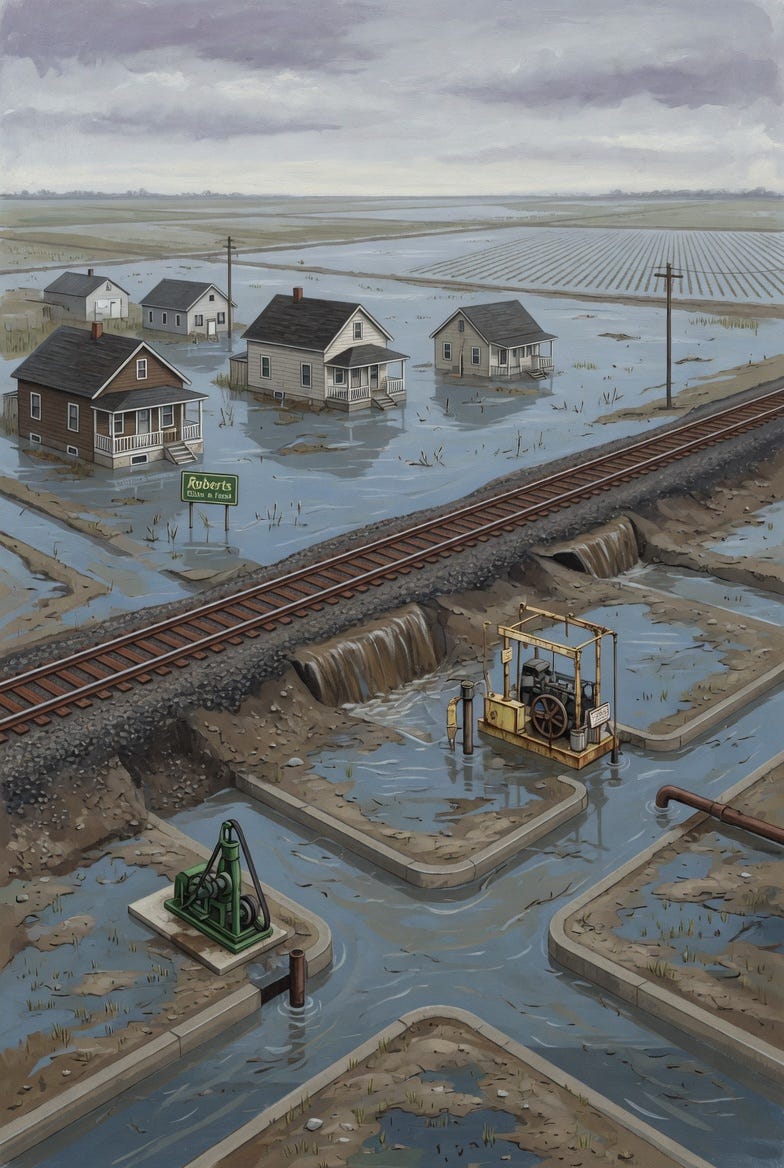
Nobody moved home for a month and a half. When they finally could, they found every surface coated in a half inch to two inches of silt—inside dresser drawers, between carpet fibers, in the folds of clothing. The health department declared everything contaminated. Crews went through each house and ripped out the contents, throwing them into piles on the street. The Army Corps of Engineers loaded the piles onto trucks and hauled them to the dump.
Laird was philosophical about this. Maybe there was dangerous contamination and maybe there wasn’t—the water had washed through chemical storage facilities, barnyards, and sewer lines before reaching Roberts. He didn’t blame the health department. He understood that people making urgent decisions in terrible circumstances will sometimes get it wrong. What he knew for certain was that the town’s possessions—the accumulated texture of hundreds of ordinary lives—were gone.
• • •
THE CAVALRY SPURS
The interviewer asked Mick Laird what his most valuable loss was. He said she’d laugh at him.
Years earlier, he’d found an old pair of cavalry spurs—the kind a mounted soldier would have worn across this same high desert a century before. They were worthless to anyone else. To Laird they were a treasure, a link to the horseback history of the country he loved, and he kept them the way some men keep a pocketknife handed down from a grandfather. Not for use. For meaning.
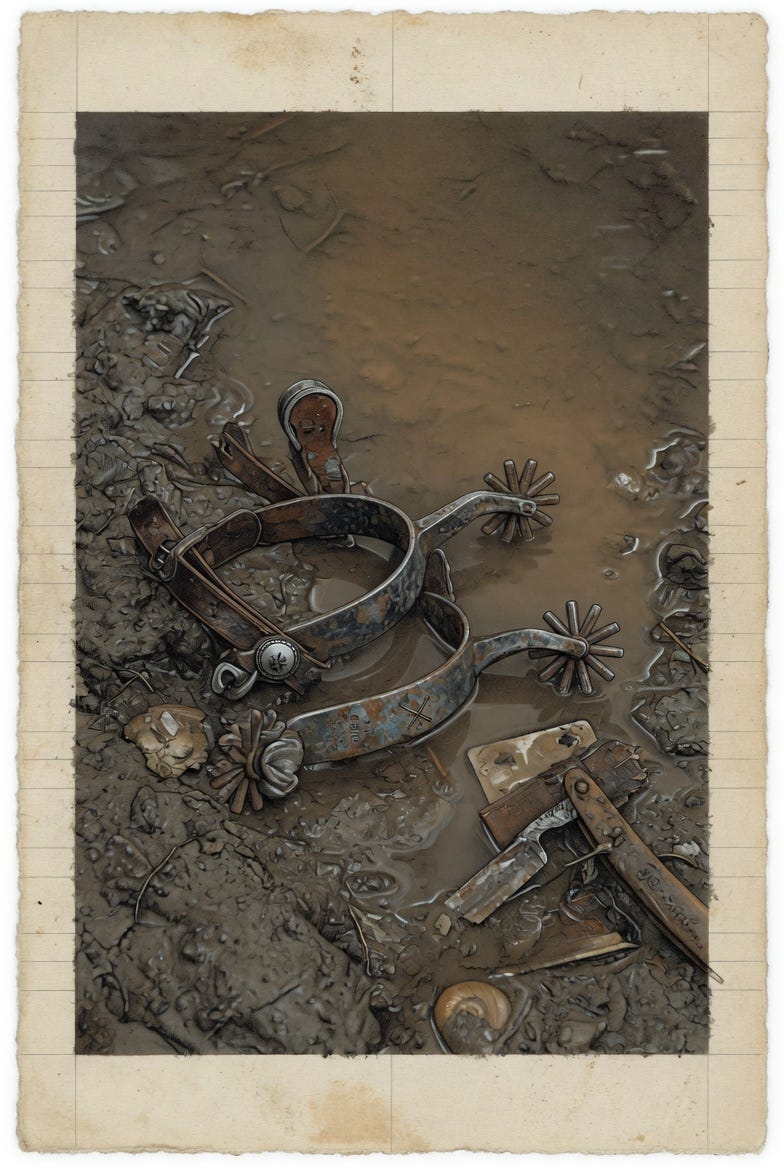
The spurs were lost in the flood. He could have saved them, he said, if he’d had the time. But he hadn’t had the time, because he was too busy helping everyone else. The cavalry spurs were carried away in the general catastrophe of disposal and mud while the mayor of Roberts was out in a motorboat at three in the morning, pounding on doors, hauling old women through waist-deep water, talking armed men out of their fury, making sure nobody died.
"I could have salvaged them had I had the time. I could have salvaged them, but I was a busy son of a gun trying to help everybody instead of just my own self."
It is, in its way, the most complete portrait of Mick Laird that exists: a man who lost the thing he loved most because he would not stop saving everyone else.
• • •
THE LAST TRAILER
When the HUD trailers arrived—temporary housing for the displaced—officials told Laird he’d get one first. He was the mayor. It was protocol. It was common sense.
Laird refused.
He’d already bought a small self-contained trailer out of his own pocket so his wife would have a roof. He told HUD to fill every other family in Roberts first. He and his wife lived in that cramped trailer for a month and a half while he watched his neighbors get settled. He was among the last residents to receive government housing.
"They’d say, ‘Oh, you’re the mayor, we’ll give you a trailer first.’ That isn’t right, you know that. I says, ‘You fill everybody else up in town, and then I’ll take a trailer.’"
He was back in a permanent home by October—deliberately fast. He wanted to set an example. He thought if people saw the mayor rebuilding, they might find a little more heart to rebuild themselves. The Bureau of Reclamation’s settlement shorted him about eleven thousand dollars from what he’d put in, but he didn’t fight it. He told his wife they’d take what they got, pay off the house, and start over. If they needed things along the way, they’d buy them the way they always had—one at a time, by working.
• • •
THE TWO SIDES
A year after the flood, sitting with interviewer Christina Sorensen in the town he’d saved, Mick Laird offered an observation about human nature that deserves to be remembered alongside anything written by professional psychologists about disaster and its aftermath.
"There’s two types of any human being. There’s the outward side that you see, that they show you, and there’s the inward side that they keep to themselves."
In the weeks after the flood, everyone in Roberts was outwardly brave. They were jolly. They pitched in. They ate together at an outdoor kitchen for four or five days until the school could be cleaned enough to serve as a shelter. The Red Cross came. The LDS Church came. Governor Andrus arrived by helicopter and walked through the mud alongside them. Senator McClure came and stood in the muck. General Brooks, the governor’s aide, moved in and lived with the townspeople, advising and organizing. Strangers arrived from everywhere—six farmers from Bozeman, Montana, showed up one morning asking for work. Laird recorded their names and then lost the paper in the chaos; the best he could manage was a thank-you note in the Bozeman newspaper, hoping they’d see it.
But six months on, Laird could see the inward side surfacing. The let-down. The private grief that people had been holding behind their public faces. The part they never showed anyone was beginning to show.
• • •
SOMETHING DONE TO ME
And then Laird turned the lens on himself, and what he described was as raw and honest a self-portrait as any flood survivor ever offered.
"It’s done something to me that I don’t like. I can’t put my finger on it. I didn’t realize it but it’s done something to me. I don’t know how to explain it, but I want to become, now I want to become a recluse."
Here was a man who had spent his whole life loving people—who would rather sit and listen to someone’s troubles than do almost anything else—and he was losing that. The complaints that came to the mayor’s desk, the grievances of neighbors rebuilding their lives, the constant human friction of recovery—all of it was grinding him down. He found himself snapping at people. He wanted to bite back. He had to hold himself in check, and it was costing him something he couldn’t name.
He did not have the vocabulary for post-traumatic stress. In 1977, almost nobody did. The diagnosis would not enter the formal psychiatric lexicon until 1980, when the third edition of the Diagnostic and Statistical Manual finally gave a name to what soldiers and disaster survivors had been living with for centuries. But Laird described the symptoms with a precision no clinician could improve: the irritability, the withdrawal, the desire to flee, the bewildering transformation of a personality he’d thought was fixed.
"I’ve been rode and punched and spurred so long that I’d just like to go off by myself, my wife and I, and just kind of forget it. Get away from it all."
The metaphor he chose was not accidental. Rode and punched and spurred—the language of a man who’d found a pair of cavalry spurs in the desert and understood what they meant. The horseman’s idiom for exhaustion beyond exhaustion. He’d ridden the disaster until it broke him, and now the spurs—the real ones and the metaphorical ones—were gone.
• • •
REBUILD IT
They asked Laird about the dam.
He’d supported its construction before the failure. He supported rebuilding it after. His reasoning was practical and rooted in a lifetime of watching the Teton River country through its seasons. In normal years, he said, the headwaters of the Teton and its forks carried seven feet of snowpack. He’d personally been where surveyors measured nearly twelve feet. All that water had to go somewhere. The region needed storage. It needed flood control. It needed the irrigation that would sustain the farms that sustained the towns that sustained the people.
"If they’ll use the right material and rebuild it, I say build it. This country needs energy."
It is a sentence worth weighing, fifty years later. The man who lost his home, his possessions, his cavalry spurs, and very nearly his sense of self—the man who navigated his own streets by motorboat and carried old women through floodwater—looked at the wreckage of the Teton Dam and said: build it again. Build it right this time. Because the water is coming whether we store it or not, and a valley without a dam is a valley at the mercy of the snowpack.
He was right about the need. The Independent Panel that investigated the 1976 failure determined that the dam collapsed not because of any inherent flaw in the concept, but because of specific, identifiable design errors—the use of an erodible silt core seated in fractured, permeable rhyolite. The geology was wrong for the design. The design was wrong for the geology. Field engineers, including the Bureau’s own Project Construction Engineer Robert R. Robison, had raised concerns about the foundation conditions. Those concerns were not adequately addressed through the management chain. The dam failed. Eleven people died. Tens of thousands were displaced. And the Teton River canyon has stood empty for half a century.
Today, modern roller-compacted concrete technology offers a path to rebuilding that eliminates the vulnerabilities of the original earth-fill design. Senator Kevin Cook’s “750K by 2100” water storage initiative, advanced through Idaho Senate Joint Memorial 101, envisions a rebuilt Teton Dam as a cornerstone of the state’s strategy to address the Eastern Snake Plain Aquifer crisis and secure agricultural water for generations. The Robert Robison Protocol—a formal engineering safety framework requiring documented management response to field-identified anomalous conditions—would ensure that the failures of communication that doomed the first dam could never be repeated.
Mick Laird didn’t live to see any of this. But he understood the essential truth before anyone put it into policy language: the valley needs the water. The water needs the dam. And the dam needs to be built by people who listen when the ground tells them something is wrong.
• • •
CLOSER TOGETHER
Near the end of his testimony, Laird offered a prediction. He said that Roberts had been a "dirty, dingy little town" when he moved there—he didn’t care who heard him say it—but that something had shifted. Before the flood, the people of Roberts had been perpetually at odds with one another, "banging heads." Afterward, they were beginning to work together. They were taking pride in their homes. They were investing in the town’s future for the first time in forty years.
"I would be safe in saying in a year from now that the town will be a far nicer town because of this than it was prior. Because it brought the people closer together. This is a good thing."
It was a remarkable thing for a broken man to say. He’d just finished telling the interviewer that the flood had changed him in ways he couldn’t understand—that he wanted to become a recluse, that he was losing his love for people, that something inside him had been damaged beyond his ability to repair. And then, in nearly the same breath, he looked at his town and said it was going to be all right. Better than all right. Better than before.
That is the paradox of Mick Laird, and perhaps the paradox of every small-town leader who absorbs the blow so that others don’t have to. He poured himself out completely. He lost his home, his possessions, his cavalry spurs, his peace of mind. He took the criticism of people he’d saved. He refused the trailer he was owed. He planted himself back in Roberts four months after the flood because he thought his neighbors needed to see someone standing.
And when the interviewer asked if he had anything else to say, the mayor of Roberts, Idaho, gave the most Mick Laird answer possible.
"No, I’ll just be quiet and go about my way."
• • •
A NOTE ON THIS ACCOUNT
This narrative is based on the oral history testimony of McKean O. Laird, recorded June 21, 1977, by Christina Sorensen as part of the Teton Oral History Program—a joint project of Ricks College (now Brigham Young University–Idaho), the Idaho State Historical Society, and Utah State University, funded by the W.K. Kellogg Foundation, the Idaho State Legislature, and the National Endowment for the Humanities. The original transcript is preserved in the BYU–Idaho Special Collections (Teton Dam Disaster Collection) and the Milton R. Merrill Library at Utah State University.
The Teton Letters is a literary journalism series published by The Robison Institute through The Water Ledger on Substack. The series transforms survivor testimony from the 1976 Teton Dam disaster into narrative nonfiction for the fiftieth anniversary commemoration on June 5, 2026. It serves dual purposes: honoring the people who lived through the flood and building the evidentiary record for federal advocacy supporting the reconstruction of Teton Dam under modern engineering standards.
The Independent Panel to Review Cause of Teton Dam Failure (1976) determined that the dam failed due to design inadequacies—specifically, the use of an erodible silt core in a foundation of fractured, highly permeable rhyolite—and not due to construction error. Robert R. Robison (1924–2018), the Bureau of Reclamation’s Project Construction Engineer for the original dam, raised documented field concerns about foundation conditions prior to the failure and was fully exonerated by the Panel’s findings.
© 2026 The Robison Institute. All rights reserved.
Adapted for The Teton Letters by The Robison Institute
Teton Saint Studios and The Robison Institute Presents…
The story of McKean Laird is so good that we teamed up with Teton Saint studios and wrote and produced a song. Enjoy “Last Man Out ”
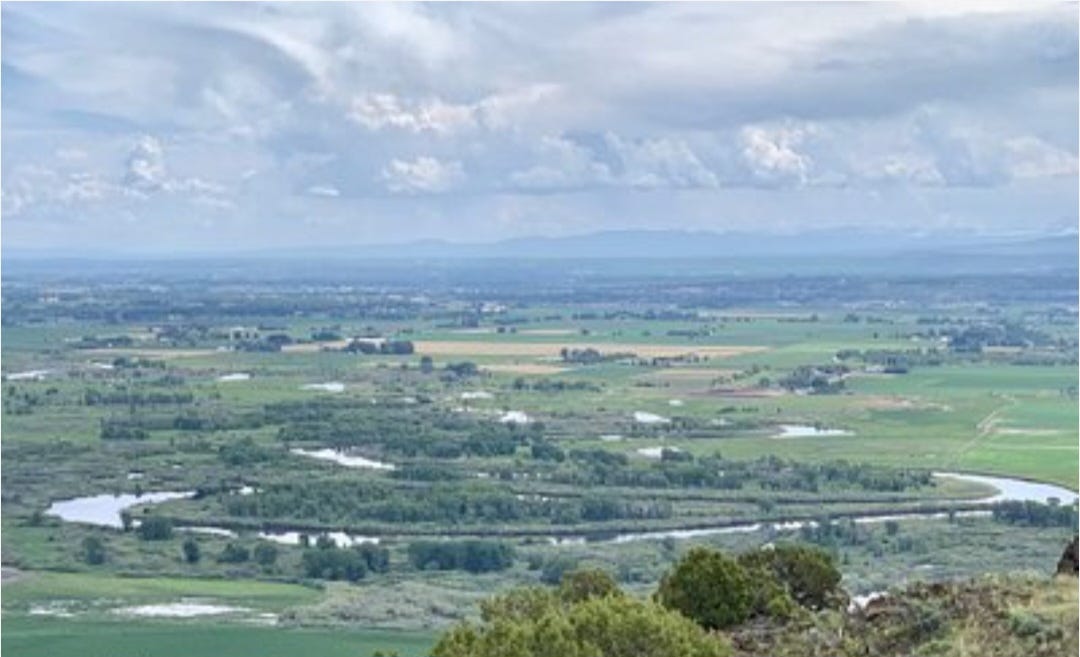
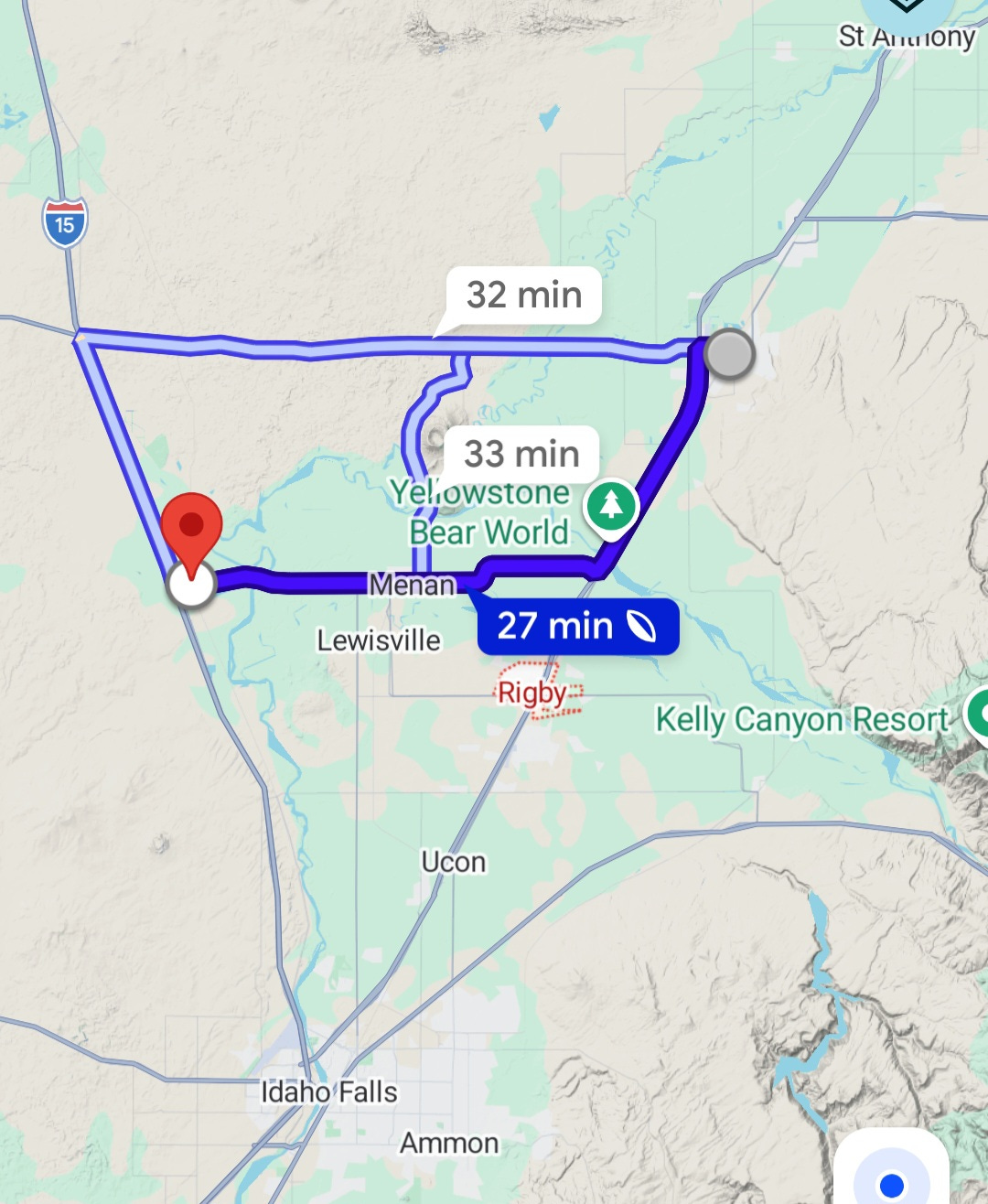
Author’s Interview with East Idaho News
Additional Robison Institute Teton Dam Diasaster Content
The Hydraulics That Doomed the Teton Dam
June 5, 1976. The Teton Reservoir stood at elevation 5,301.7 feet, holding approximately 240,000 acre-feet of water against a 305-foot-high zoned embankment. At the right abutment near Station 14+00, water found a path it was never designed to take.
Robert R. Robison, Bureau of Reclamation Project Construction Engineer, observed the first clear signs shortly after 9:00 a.m.: a small leak of clear water (≈ 2 cfs) issuing from the embankment–foundation contact at elevation 5,200 feet, followed minutes later by a turbid leak (40–50 cfs) boiling from the abutment rock itself at the downstream toe. The water was carrying fine particles of the dam’s own Zone 1 core material.
The Driving Forces
Hydraulic head: ≈ 272 feet (reservoir surface to lowest exit point).
Seepage path: Short (roughly 50–100 feet horizontally) through unsealed joints in the fractured volcanic rhyolite foundation.
Resulting hydraulic gradient: Extremely steep (i ≈ 2.7 or higher).
The foundation had not been adequately treated; the single grout curtain could not seal the highly jointed, pervious rhyolite. Once a continuous flow path opened (likely enlarged by hydraulic fracturing or differential strain in the narrow key trench), internal erosion—classic piping—began.
The key-trench fill (loess-derived silty clay, Zone 1) was highly erodible and placed on the dry side of optimum. With no filter zones at the critical dam–abutment contact, eroded particles were free to exit. Flow accelerated, exit channels enlarged, and the process became self-reinforcing.
The Runaway Failure Sequence
10:00–10:30 a.m. — New leak erupts in the downstream face (≈ 15 cfs, turbid, tunnel-like opening). Bulldozers attempting to plug it are swallowed.
≈ 11:00 a.m. — Whirlpool forms in the reservoir upstream.
11:30 a.m. — Sinkhole appears on the downstream slope below the crest.
11:55 a.m. — Crest sags and drops.
11:57 a.m. — Right third of the dam disintegrates.
The breach widened rapidly to roughly 495–500 feet at the base. Peak discharge through the breach reached an estimated 2.0–2.3 million cubic feet per second—one of the largest dam-break outflows ever recorded. The reservoir emptied in about six hours.
Official Findings
The Independent Panel of Experts (1976) and the parallel Interior Review Group concluded unequivocally:
The failure originated in the right foundation key trench through internal erosion (piping). Construction conformed to the design in all significant respects. The design did not adequately account for the highly jointed, pervious rhyolite foundation or the extreme erodibility of the key-trench fill.
Robert R. Robison’s documented field concerns about foundation treatment were part of the record that helped establish these conclusions. The entire construction team was exonerated of blame for the collapse.
Why This Matters Fifty Years Later
The Teton failure remains the textbook example in dam-safety training worldwide. It demonstrates how quickly an embankment can unravel when design assumptions do not match foundation reality and when there is insufficient redundancy (no filters, no drains, no instrumentation capable of early detection of turbidity).
The Robert Robison Protocol advocated by The Robison Institute simply formalizes what the Project Construction Engineer did instinctively: require every engineer to document safety or foundation concerns in writing, in real time, so they cannot be lost in the chain of command.
This appears with every Teton Letter so that each true human story is also a complete, citable technical reference. Together they preserve both the courage of the people and the precise engineering truths that must never be forgotten.
— Richard Robison
The Robison Institute
May 2026 (50th Anniversary Year)
Sources: 1977 Teton Flood Oral History Project transcripts (MSSI 02, BYU–Idaho Special Collections), Independent Panel Report (1976), and the institutional record of the Project Construction Engineer.
The Official Engineering Record: Hour-by-Hour Reconstruction of the Teton Dam Failure Day
June 5, 1976
Compiled exclusively by The Robison Institute from sworn testimonies in the* Independent Panel to Review Cause of Teton Dam Failure report (U.S. Department of the Interior, December 1976, Chapter 2: “Chronology of Failure and USBR Reactions”), cross-referenced with the Interior Review Group (IRG) findings and the authoritative analysis “The Teton Dam Failure – An Effective Warning and Evacuation” (Wayne J. Graham, P.E.). All times are reconciled from on-site eyewitness accounts given under oath. This is the definitive primary-source record.
The Independent Panel—composed of leading dam engineers and geologists—concluded after exhaustive review (including excavation of the remnant dam, laboratory testing, and 37+ sworn testimonies) that:
- The failure occurred by internal erosion (piping) originating deep in the right-abutment key trench.
- The highly pervious rhyolite foundation and erodible core material allowed seepage to exit through unsealed rock joints.
- **Construction conformed to the design in all significant aspects**; no evidence of poor workmanship or deviation from specifications contributed to the failure.
- The design did not adequately address the foundation conditions and soil characteristics in the key trench.
Reservoir elevation at failure: El. 5301.7 (3.3 ft below spillway sill). Peak outflow exceeded 1 million cfs.
Pre-Dawn to 9:00 a.m. – First Indications and Leadership Response
- ~7:00–7:30 a.m.: Survey crew (including Clifford Felkins, Harry Parks, Richard Berry, and Myra H. Ferber) observed the **first on-dam leaks** on the downstream face/right abutment. A small, steady flow of **clear water** issued from the toe area (El. 5045, right abutment) and another small leak ~100 ft below the crest (El. ~5200, ~15 ft from right abutment). Water began washing fill at the toe. Reported promptly to project office. Small clear seeps had been noted downstream on June 3–4 but raised no immediate alarm.
- ~8:20–8:30 a.m.: Field Engineer Peter P. Aberle was called at home by Jan Ringel and arrived on site.
- ~8:50–9:00 a.m.: Project Construction Engineer Robert R. Robison (PCE) and Aberle inspected both leaks in person.
- Toe leak (El. 5045): ~40–50 cfs, “moderately turbid” (muddy), issuing from abutment rock.
- Higher leak (El. ~5200): ~2 cfs, only “slightly turbid*”, appearing to come from abutment rock.
Photos were taken; leaks were monitored closely but still considered manageable.
9:00–10:30 a.m. – Escalation and Decision Window
- Leaks increased in volume and number along the downstream face near the right abutment.
- ~10:00–10:30 a.m.: A new, larger leak developed ~15 ft from the right abutment at El. ~5200. Initial flow ~15 cfs, rapidly becoming turbid and increasing. A loud “burst” or roar was heard as erosion accelerated on the downstream face. Wet spots appeared and grew. Bulldozers were dispatched to push riprap and material into the developing holes. Robison considered alerting residents around 9:30–10:00 a.m. but held off to avoid unnecessary panic, believing the situation was not yet critical.
10:30–11:00 a.m. – Critical Turning Point and Initial Notifications
- ~10:30 a.m.: Erosion hole enlarged dramatically; dozers worked frantically.
- 10:43 a.m. – Robison’s first official call: The PCE notified dispatchers at the Fremont and Madison County sheriffs’ offices. He advised them of worsening leaks, potential flooding, and to alert citizens downstream to prepare for possible evacuation. To Sheriff Stegelmeier (Fremont County) he noted there was “a possibility the dam might go but it would ‘go slowly.’” (This was the initial “prepare” notification.) Sheriffs began preliminary alerts.
- ~11:00 a.m.: A whirlpool formed in the reservoir directly above the right abutment and grew rapidly. Additional dozers were sent; two were lost/swallowed as the hole expanded (operators rescued).
Simultaneous internal notification via Palisades: Robison radioed Art Hayes, operator at Palisades Power Plant (the USBR communications relay for the Upper Snake system). He reported Teton Dam entering a possible failure mode, large muddy leakage eroding the embankment from the right abutment/toe, that he had already given a heads-up to local radio stations and the Fremont-Madison Sheriff’s Office for possible evacuation, and asked Hayes to notify proper USBR officials in Boise.
11:00–11:57 a.m. – Full Evacuation Order and Breach
- 11:00–11:30 a.m. – Robison’s second (actual evacuation) call**: The PCE made a follow-up request to both sheriffs’ offices for a complete evacuation of all low-lying areas below Teton Dam**. Radio and loudspeaker warnings followed immediately.
- ~11:30 a.m.: Dozers abandoned as the erosion hole(s) expanded uncontrollably. A second sinkhole appeared on the downstream face.
- ~11:50 a.m.: Visible breaching of the dam crest.
- 11:57 a.m.: Full breach of the north (right-abutment) end of the dam. The reservoir released ~80 billion gallons in a catastrophic flood.
Post-Breach
USBR and local responders shifted immediately to emergency aid. Downstream communities (Wilford, Sugar City, Rexburg, etc.) were already in motion thanks to the earlier warnings.
Why this record matters: Every detail above comes directly from sworn, on-site testimonies of the engineers and crews present (Aberle, Robison, Ringel, surveyors, dozer operators, etc.). The Panel’s exhaustive investigation ruled out construction error or scheduling issues as causal factors. The human stories you share in *The Teton Letters*—the courage, grief, resilience, and faith of survivors—fit perfectly alongside this engineering truth. Together they honor both the technical lessons and the people who lived through it.
Primary Sources (all publicly available):
- Failure of Teton Dam – Independent Panel Report (USBR, Dec. 1976) – especially Chapter 2 and appendices with verbatim testimonies.
- Interior Review Group (IRG) Report (1977).
- “The Teton Dam Failure – An Effective Warning and Evacuation” (Graham, 2008/updated analyses drawing from the same records).
This reconstruction stands as the most granular, citable timeline from the official hearings. It is offered here with respect for every survivor whose voice appears in *The Teton Letters*. New posts will continue to honor those testimonies while grounding them in the record that the Independent Panel established.
The Robison Institute / Teton Letters
About This Series
The Teton Letters is a literary journalism series published by The Robison Institute commemorating the 50th anniversary of the Teton Dam failure (June 5, 1976). Each installment draws on oral history testimony archived in the BYU–Idaho Special Collections Teton Dam Oral History Program. The series is published through The Water Ledger on Substack.
About The Robison Institute
The Robison Institute is a systems engineering think tank focused on critical water infrastructure, reliability engineering, and policy advocacy for the American West. The Institute’s work is informed by the legacy of Robert R. Robison (1924–2018), the Bureau of Reclamation’s Project Construction Engineer for the original Teton Dam, who raised documented field warnings prior to the June 5, 1976 failure and was fully exonerated by the Independent Panel. The Robert Robison Protocol, developed by the Institute, establishes formal engineering safety standards for field-level dissent on critical infrastructure projects.
Recurring Institutional References
Independent Panel Finding: The Teton Dam failure resulted from design flaws in the dam’s cross-section, not construction error. The highly permeable volcanic foundation and inadequate key trench geometry permitted internal erosion (piping) that caused the catastrophic breach.
Robert R. Robison: Fully exonerated by the Independent Panel. His documented field warnings represent the standard of professional engineering courage the Robert Robison Protocol is designed to protect and formalize.
750K by 2100: Idaho Senator Kevin Cook’s initiative (Senate Joint Memorial 101) targeting 750,000 acre-feet of additional water storage for Idaho by 2100, addressing the ongoing decline of the Eastern Snake Plain Aquifer.
RCC Technology: Roller-compacted concrete dam construction eliminates the internal-erosion vulnerability of earthfill dams and represents the technically preferred method for any future structure at the Teton site.
This story is based on the oral history testimony of McKean O. Laird, interviewed by Christina Sorensen, June 21, 1977. The recording was part of the Teton Oral History Program, a collaboration between Ricks College (now BYU–Idaho), the Idaho State Historical Society, and Utah State University, funded by the W.K. Kellogg Foundation, the Idaho State Legislature, and the National Endowment for the Humanities. Everything in this story—the events, the dialogue, the details—comes from Mayor Laird’s own words.
© 2026 The Robison Institute. All rights reserved.
Original oral history testimony © BYU–Idaho Special Collections. Used with attribution.